
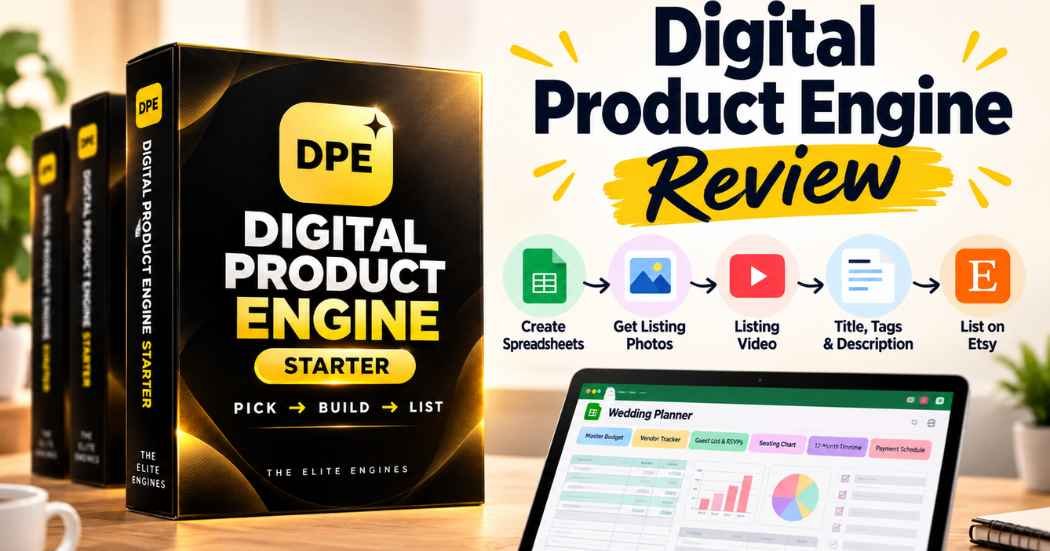
(Disclosure: This post may contain affiliate links. If you purchase through one of my links, I may earn a commission at no extra cost to you.)
Selling digital products seems like it can be a simple method to build an online business. No inventory, shipping, or warehouse. So, it’s natural that offers such as Digital Product Engine are getting attention.
This Digital Product Engine review goes past the hype. I went over the landing page information and found out what it says is being offered, how it works, the pricing, and where it is lacking.
At the end, you will have an idea of whom it can assist and whom you should probably steer clear of. You will also learn what to look for prior to paying. This is not a “hands-on” test, so all of the information is as it is presented on the sales page.
What Is Digital Product Engine?
A digital product engine is a system that is based on creating and selling digital products online. The objective of the sales page is to not have any stock; to sell something that a customer can download.
Digital product examples are:
- Ebooks
- Guides
- Checklists
- Templates
- Printables
- Worksheets
- Planners
The landing page is about beginning with one product and making it something that you can sell. It also discusses self-employment in the sphere of digital trade and online stores, and how to attract more buyers via other platforms.
All of the information in this section is from the sales page and not my own experience of using the product. That matters. An idea can be expressed well on a page without being illustrated. However, a product is just one component. Still, you need an audience, traffic, and the means to convert your visitors into buyers.

How Does Digital Product Engine Work?
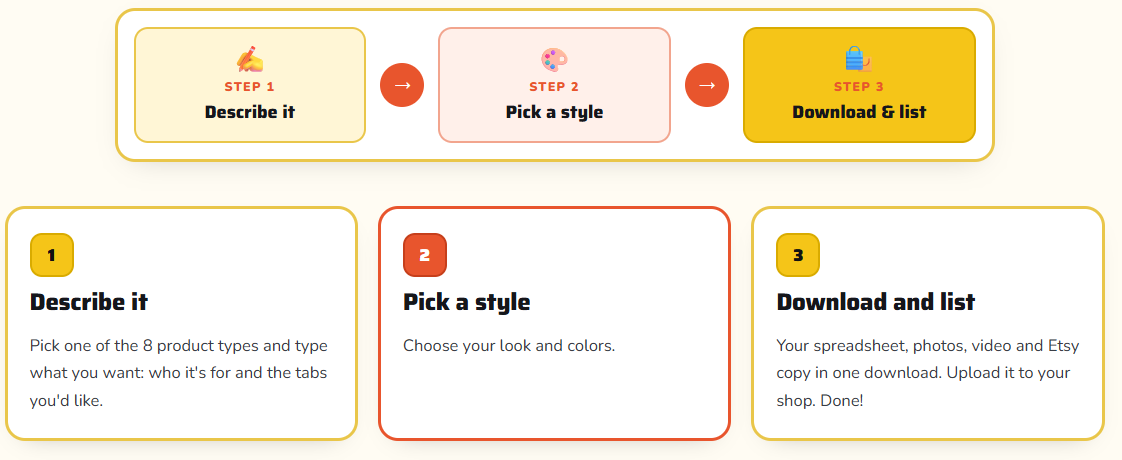
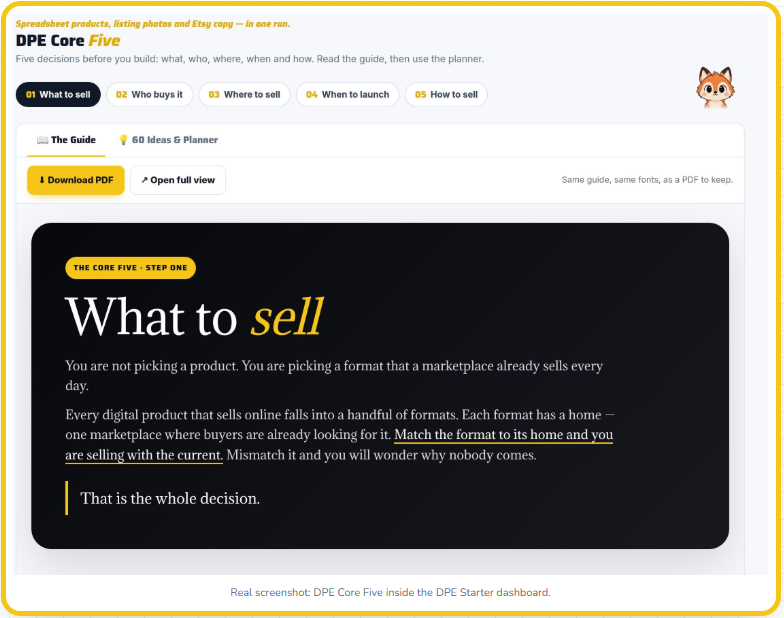
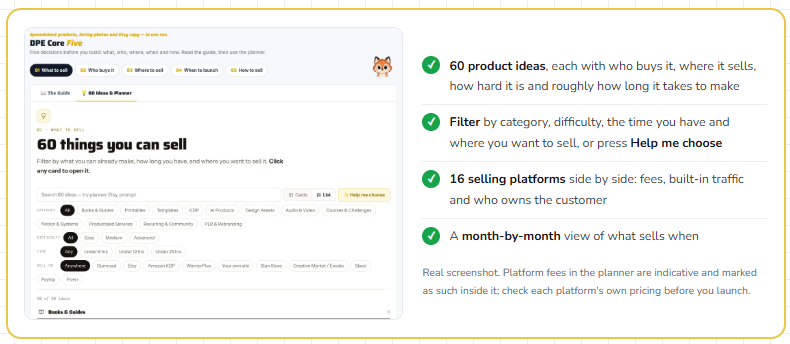
The sales page is straightforward. Therefore, the workflow should be as follows:
- Identify product concept. You have to have something that people will want.
- Create the product. It should solve a problem, answer a question, or save someone time.
- Establish a sales process. The page emphasises the importance of owning a store.
- Reach buyers. This can be search engines, social media, email, community, or paid ads.
- Sell and improve. Try something out, and tweak the product, price, or listing or sales page.
That may seem easy, but there’s still work to be done. Every step is time-consuming, and the page does not guarantee that any step will occur independently. I would not put steps on the landing page that they don’t display. Please consult member area details at checkout for exact details of training.
What Do You Get With Digital Product Engine?
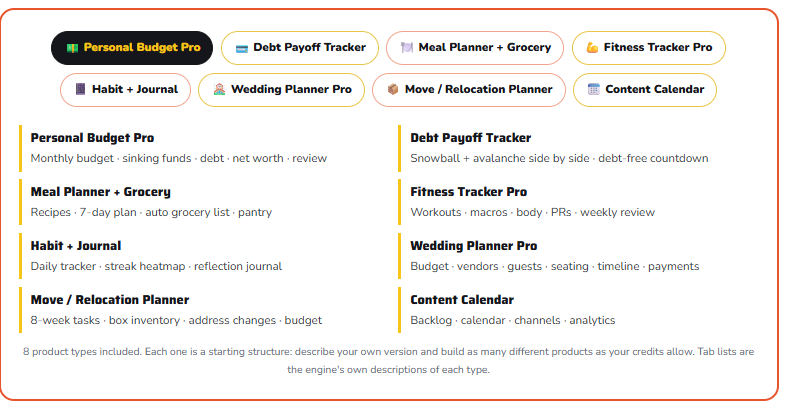
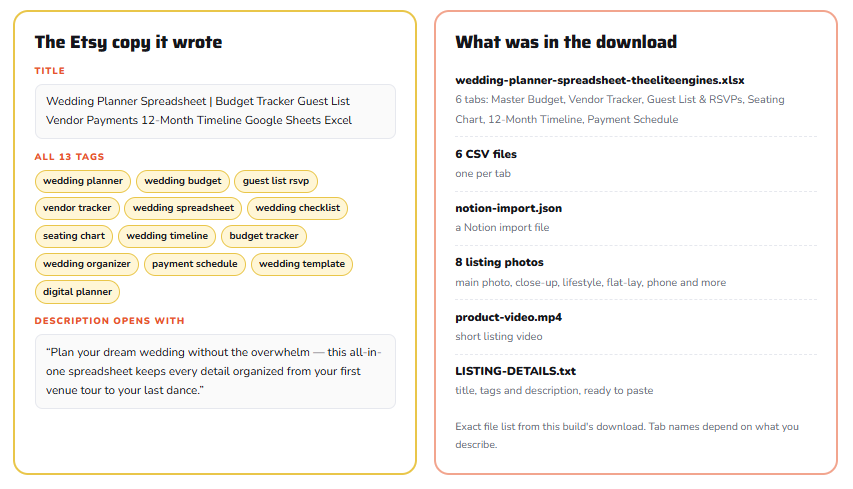
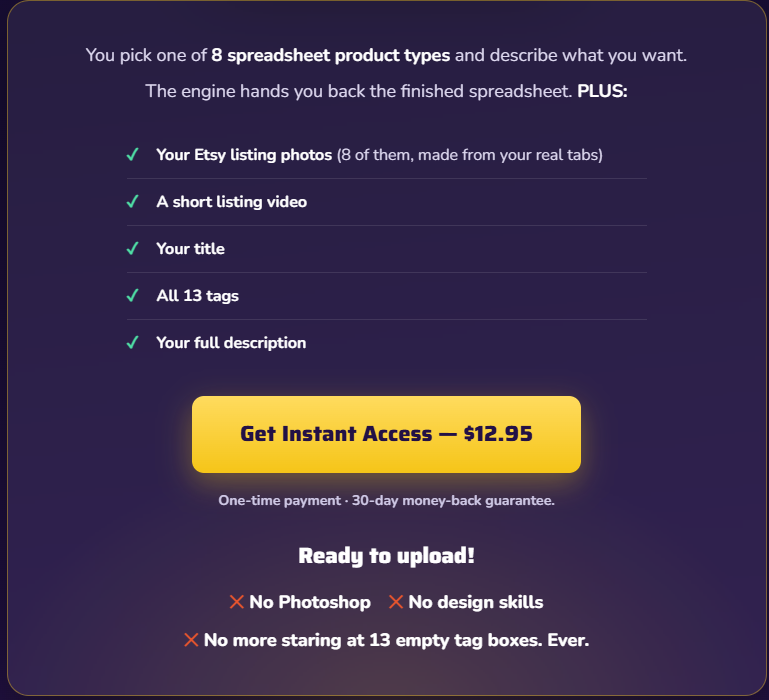
On the landing page, the offer appears to be a more sensible approach to digital product selling than the traditional approach. It discusses the key areas it emphasizes:
- Designing a basic digital product
- Venturing into digital product sales online
- You can build a store of your own, simply by following a few steps.
- When a product is offered for sale in more than one channel.
- Ensuring products are in front of the buyers is essential.
- Creating a digital product that can be scaled.Developing a scalable digital product business.
Here is the catch. Instead of detailing all of the files, lessons, and tools, a sales page can paint a picture of the overall product. So, I can’t guarantee any additional templates, software, or bonuses! Do not take anything for granted at checkout if you don’t see it stated explicitly.
My words of wisdom are short. Always check out page and product access information before making payment. Make sure that you’re receiving what you’re expecting. If it is not clear, ask the seller.
How the Digital Product Selling Process Works
Digital product selling is popular because you create something once and can sell it many times. There is no stock to store or ship.
Take a meal-planning ebook as an example. You write it, design the pages, and save it as a file. You put it on a store page, write a description, and set a price. Then you bring people to that page. When someone buys, the file is delivered to them.
The full chain looks like this:
Idea, product, store or listing, traffic, customer, sale, delivery.
Creating the product is only one link. Many beginners spend weeks on the ebook and almost no time on how people will find it. A great guide that nobody sees will not sell. Packaging, listing, promotion, and delivery all matter just as much.
This is why I see Digital Product Engine as a starting framework, not a magic button.
Selling Products Through Your Own Store
One of the innovative aspects of the offer is the own-store concept. Your own store allows you to control the content displayed, the text on it, and how you present your brand.
Possible advantages:
- Greater flexibility in the appearance of the storefront.
- A direct link with your customers.
- A single location for multiple products.
- You’re not relying on one marketplace.
Possible challenges:
- No store will attract customers if the store itself does not come to them.
- It takes time to set up and maintain.
- Learning about payment processes and customer service might be necessary.
- It’s important for a new store to establish trust.
Thus, with more control comes more responsibility. It could be traffic from SEO, Pinterest, Facebook, email, YouTube, or ads. They are all hard to learn. In order to make sales, a store must be built, and a sales page does not make that claim.
Can You Sell the Same Product on Multiple Platforms?
The landing page encourages selling via your own store, as well as platforms like Etsy. The thinking is simple. A marketplace can help you find another avenue for customers to discover your store, if it’s not your own.
This may make you more vulnerable. But look out here. Do not assume that all products are compatible for copying to all platforms.
The rules of each marketplace include:
- What can be sold
- The rights of authorship and ownership of products.
- Digital downloads
- Listing requirements
- Fees
- Customer communication
- Refunds
There are fees and competition variations, too. The title, image, or description used on one of these listings might be different elsewhere. Do not list anything before reading the policies of each platform.
Digital Product Engine Pricing
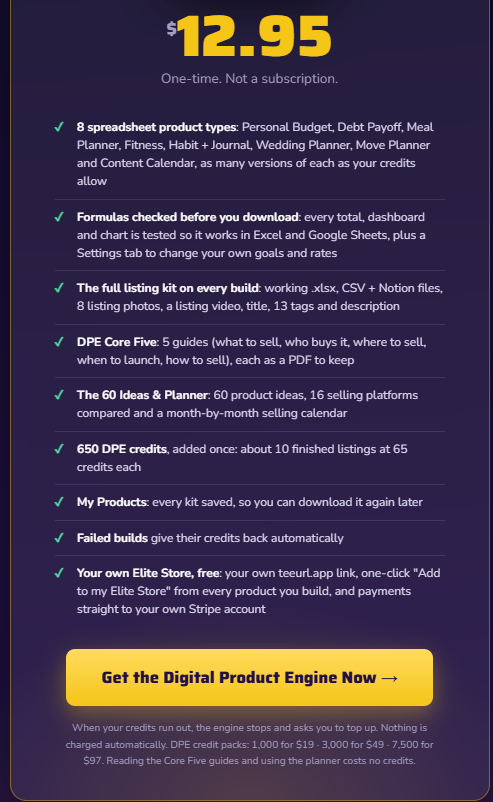
According to the landing page, the offer price that I checked was $12.95. Compared to many online business courses, that is a low entry price to test the idea without a huge investment in pricing Digital Product Engine.
However, the price shouldn’t be the sole deciding factor in purchasing. The more pertinent question is, will the information that’s contained within help you to move forward?
An expert at producing products, setting up stores, and marketing them probably doesn’t require a beginner system. A well-organized beginning can be of greater benefit to someone who is entirely unfamiliar with the topic or interested in the field.
Two reminders:
- The price is subject to change. The current total can be found on the checkout page.
- The purchase price does not necessarily include all costs. There are still other costs you may incur, such as hosting costs, domain, design software, payment processing, and advertising.
I don’t mean that there are any hidden fees. I’m saying that normally there are expenses for a business other than one purchase.
30-Day Money-Back Guarantee
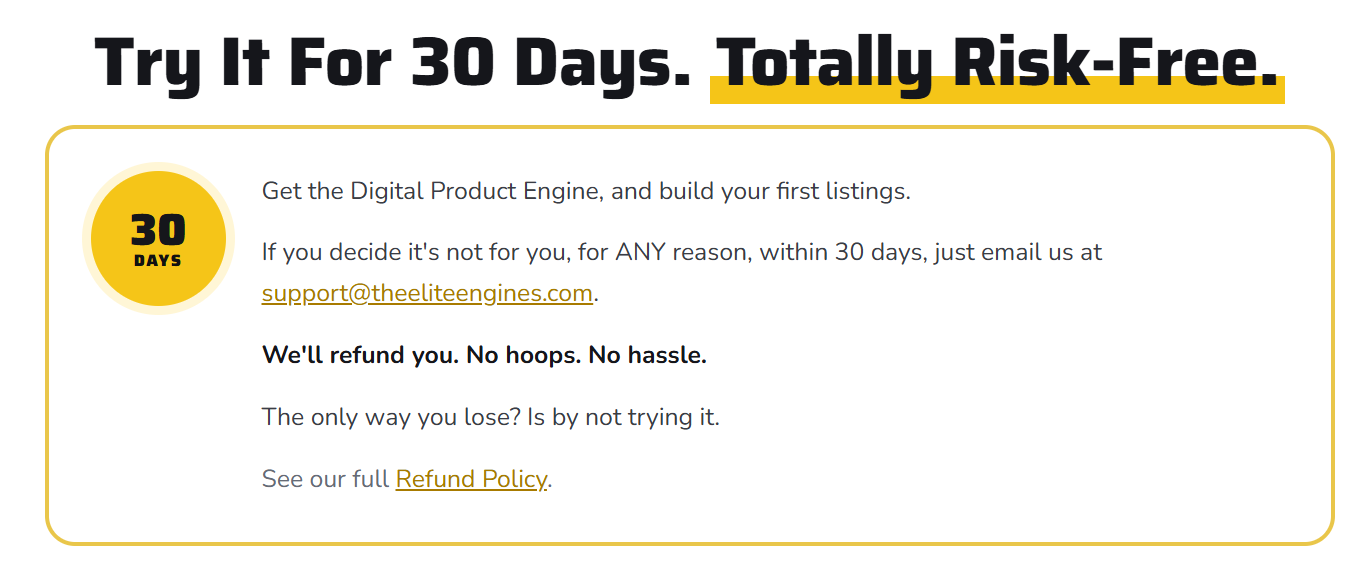
A 30-day money-back guarantee is offered on the sales page. That allows you to inspect the product, rather than commit to a final purchase.
However, check the real refund policy before you purchase. A guarantee reduces the risk of your purchase. It can’t promise you will make money in those 30 days.
That’s a difference that matters when it comes to any product that is being used in an online business. Purchase when it appears to be relevant information regarding what you want to learn. Avoid purchasing because you believe that the guarantee will yield results for you. It only applies to the purchase, as outlined. I wouldn’t consider it to be a no-risk offer unless I read the terms.
What I Like About Digital Product Engine
Here is what stands out, based only on what the landing page shows.
The entry price is low. At $12.95 on the day I checked, a beginner can try the model without a big upfront bet.
It focuses on digital products. There is no physical stock to store or ship, which removes a lot of beginner headaches.
The own-store idea is useful. Having your own selling space gives you more control and helps you build a brand over time.
It encourages multiple channels. Using your own store next to a marketplace can reduce your dependence on one traffic source.
The concept is easy to grasp. Create something useful, put it where people can find it, and sell it. You do not need to understand complex logistics.
There is a 30-day guarantee. According to the landing page, you can review the product under its refund terms.
What I Don’t Like About Digital Product Engine
This one is most important, and I’ll keep it straightforward.
It won’t make you sales. Purchasing it doesn’t generate sales. This is the major factor. While a system can help you tell them what to do, customers still have to discover your product.
There’s still traffic to be done. You have to have a strategy to attract buyers, and that will take time.
Competition is real. Courses, templates, printables, and ebooks abound! There has to be a reason why customers will select your product over another.
Marketing still matters. Learning SEO, social media, email, and/or ads might be necessary.
Marketplace rules apply. Other platforms are to be sold in accordance with their policies.
Results vary. The same process can yield vastly different results for two people due to the difference in product, audience, and effort.
The sales page does not answer any questions. Don’t reveal all the details in it; there are still some things you must check before purchase.
That’s why I wouldn’t purchase this product and assume that it will provide me with a steady cash flow.
Can Digital Product Engine Help You Make Money?
Maybe, but it’s a long way from having a system to making money with it.
Digital products are able to be sold online. A training or system can be used to get an understanding of the process. However, purchasing Digital Product Engine does not mean you will earn money. So, I will not post any income numbers, as no honest review can.
The results that you achieve will depend on:
- Product quality
- Market demand
- Pricing
- Competition
- Traffic and marketing
- Sales page quality
- Customer trust
- Your consistency
Imagine a really great $10 eBook. If it has fewer than 20 views, you might not make a sale. The more you reach the right people with a valuable product, the better it’s going to be. Use this as an income generator, not an automatic income machine.
Who Is Digital Product Engine For?
These are possible target groups for the concept:
People who are new to creating digital products. A structured path can provide a starting point if you’re not familiar with how this business operates.
Individuals looking for a budget-friendly entry. The initial step is still small, at a price of $12.95 when I checked.
Individuals who desire to develop downloads. The topic is for those who wish to use ebooks, templates, guides, or checklists.
Those desiring to run their own business. However, if you don’t want to use only marketplaces, the own-store business model might be attractive to you.
Individuals looking into more than one channel. The concept of blending your store with a marketplace could be a worthwhile consideration.
Individuals who are ready to learn about marketing. This one is key. Even the best product goes untouched without promotion.
Who Should Not Buy Digital Product Engine?
I don’t think it’s right for those who always think, “I will buy this today and earn passive income from it tomorrow. This is not a sensible way to begin.
If you consider yourself a good candidate to pass, you should:
- Want instant income.
- Be prepared for a completely hands-off business.
- Avoid producing products.
- Not want to push them.
- Not be interested in learning the basics of online marketing.
- Do not count on the product to bring customers to you.
- Have good experience in selling digital products.
These are all fine. Simply are not the kind of thing a beginner system is supposed to provide.
Digital Product Engine Pros and Cons
Here is a quick side-by-side look. The Digital Product Engine pros and cons below come from the landing page and general business reality.
Pros | Cons |
Low entry price | No guarantee of sales |
Focuses on digital products | You still need to generate traffic |
Own-store selling approach | Store setup takes some work |
Multiple selling channels | Each marketplace has its own rules |
Suitable for beginners | Digital product competition is high |
30-day money-back guarantee | Results can vary |
No physical inventory required | Marketing is still necessary |
The biggest positive is the simple business model. The biggest limit is just as simple: you still have to build the business.
Digital Product Engine vs. Starting From Scratch
You can buy a structured product, or you can learn everything yourself from free articles, videos, and trial and error. Neither one removes the work.
Factor | Digital Product Engine | Starting From Scratch |
Getting started | Follow a structured approach | Research everything yourself |
Learning curve | Guided information | Self-directed |
Product research | Potentially less time | Potentially more time |
Store setup | Guidance may be available | Learn independently |
Selling approach | Based on the system | Your own process |
Research time | Potentially shorter | Potentially longer |
Marketing | Still your responsibility | Still your responsibility |
Flexibility | Depends on the system | Complete control |
Cost | Purchase price | Can start with free resources |
The better choice depends on your skills, your patience, and how you like to learn. If you enjoy having things organized, a paid system may feel easier. If you love digging into research, free resources can take you far.
Is Digital Product Engine Beginner-Friendly?
The concept is very simple. No need to understand the stock or delivery process. The principal procedure is to create, list, promote, and sell.
Simple is not easy, however. Even a novice needs to know how to:
Choose a product idea that is appropriate.
- Gain insight into the target group(s)
- Create useful content
- Write product descriptions
- Set a price
- Get traffic
- Handle customers
- Tweak the product in response to feedback
The concept would be considered to be beginner-friendly, but the business itself would be demanding. It is not easy because it’s cheap. The skill required is not displayed on the landing page, so verify details about the product before clicking.
Is Digital Product Engine Worth It?
I’m not going to give a one-word verdict on this one; that is up to you. These are the reasons why the Digital Product Engine worth it question needs to be addressed:
- The price that you are about to use in the checkout procedure.
- What actual benefits you will receive.
- Your experience level
- Your real interest in digital products
- If you are willing to market what you do.
- Your expectations
- The 30-day guarantee periods
- You can opt for options like a framework or a guaranteed income promise.
If you are a beginner, have no budget, and are willing to put in the work to market, this may be helpful.
If you already make sales of digital products or if you want sales without promoting the product, then it may not be useful.
If you are reading this Digital Product Engine review 2026 because you are on the fence, that checklist is the best place to start.
Final Thoughts on Digital Product Engine
Digital Product Engine is all about a single concept: Make digital products and establish an online selling method. Simple products, own shops, and selling via multiple channels are emphasized on the landing page.
Main advantages include the low price displayed, the model’s simplicity, and its 30-day warranty, which is listed on the page. The primary restrictions are just as obvious. It’s not a traffic source. Does not eliminate competition. And it doesn’t provide you with customers.
This Digital Product Engine review is all about expectations. If you need a framework to begin and if you’ll settle for results that are based on your product, marketing, and effort, it may be worth investigating.
Interested in getting a closer look? One can’t only look at the present Digital Product Engine offer and determine if it matches your objectives.
Frequently Asked Questions
What is Digital Product Engine?
Digital Product Engine is a system that is centered around digital products and their sales online. Simple downloadable products, an own store, and selling through multiple channels are some of the highlighted features on the landing page. It’s designed for individuals who desire a structured beginning to digital product selling.
What is the cost of Digital Product Engine?
The offer price at the time the landing page was checked is $12.95. Check the checkout page to find the new price, as it may change. Keep in mind also that the hosting, design tools, payment processing, or ads may be additional costs apart from the product.
Is Digital Product Engine easy for newbies to learn?
It’s presented in a simple manner and could be suitable for beginners. However, even beginners need to learn about the creation of products, marketing, traffic, and customer support. Easy to understand doesn’t mean easy to run, so there will be a learning curve.
Can you sell digital products through your own store?
Yes. One of the primary concepts in the landing page is having your own shop. A store provides you with a focal point to display and sell your products. It will not draw visitors, so you would need a traffic plan anyway.
Can the same digital product be sold on multiple platforms?
The landing page encourages the sale of products via their own store, as well as through sites like Etsy. However, each platform has specific rules regarding copyright, ownership, listing, and fees. Be sure to review each platform’s current policies before listing the same product on multiple platforms.
Is Digital Product Engine a money spinner?
No. An assumption of income should not be made. The results you will obtain will rely on the demand, the quality of your products, their price, the competition, traffic and marketing, and your consistency of work. Use it as a learning and business instrument rather than as a sure thing for income.
Do they offer a money-back guarantee?
The landing page displays the guarantee of 30 days for a money-back. Be sure to read the current Refunds Terms before purchasing. When you have a refund policy, you reduce your risk of a purchase, but you won’t necessarily make money while you’re making your purchase.
Is marketing important for digital product sales?
A little knowledge of marketing goes a long way. Even a fantastic product requires individuals to see it. You will have to learn some SEO, social media, email, or paid ads. You don’t need to do everything at once, and you can learn one traffic method at a time.
Should you try Digital Product Engine?
This depends on your objectives. If you want a structured introduction to a low-cost option, and you’re willing to advertise your products, then it might work for you. If you need an income right away, or one that is guaranteed without marketing, it might not be a match for you.