

(Disclosure: This post contains affiliate links. I may earn a commission at no extra cost to you.)
History Co-Author Review: What Is It?
Writing a history book sounds simple until you try it. You must have good sources, a clear organization, consistent writing, proper names and dates, and sufficient story to hold the reader’s attention. Typically, people get stuck in the middle.
That’s the area this History Co-Author review examines. History Co-Author is a product of Soren Jordansen. It’s an AI-driven tool for research and writing complete-length narrative history books that works within Claude or ChatGPT.
What about simply requesting a chatbot to write a history book? A long book requires some research, continuity, and steady voice, and a blank chat window will provide you with none of these. This process attempts to return a process to you instead. I’ll discuss the contents, operation, evidence, limitations, upsells by History Co-Author, and whether I recommend it or not below.
What Is Included in History Co-Author?
The core package consists of five modules, with each module performing a specific job.
The primary genre engine is the Narrative History Framework. It manages aspects of story structure, story speed, scale, and rules for narrator and record.
The prose is dealt with by the Narrative History Style Pack. It’s meant to help prevent flat or machine-sounding writing.
The Set-up Prompt guides you through a planning discussion that takes you through 18 steps prior to any chapter being written.
Narrative History Studio is the convenience layer, having plugins for Claude Cowork and ChatGPT Work.
Last but not least is the 29-module History Co-Author training that extends beyond the writing to editing, formatting, and publishing.
What’s the point of a buyer being interested? The History Co-Author features span the entire process of working through an idea to publishing the book. This is why it is not a prompt pack, but is a full system.

How Does History Co-Author Work?
There are three phases of the workflow: Plan, Write, and Publish. Research is present along each one of them.
Plan
You upload the three basic files to a Claude or ChatGPT project, and start a conversation about the 18 steps of planning. The system provides options and details for reasoning at each step, meaning that you are not guessing. At the end, you will have 5 planning documents.
Research
There are three research moments embedded within the Design process of Setup. The AI accesses the appropriate sources and creates a research history – not just relying on memory. One could also provide sources one wishes to use.
Write
The book is written chapter-wise. The framework regulates the voice of the story. The facts and sources are contained in the Research Bible. Each chapter should be linked to the previous one with the help of a running Book State.
Publish
Closeout is completed when the book is finished. The system generates the supporting documents:
- Familiarity with the cast of characters in the book.
- Name notes
- Source notes
- Chapter notes
- A selected bibliography
Then, you’ll be guided through Kindle Create and the KDP publishing process.
History Co-Author Research Bible Explained
During the Setup, the following 5 planning documents are created: Research Bible, Hypothesis, Plan A, Plan B, and Experimental Design. Consider it to be the main research file for your book.
Hundreds of facts can be included in a history book. Everything – from dates to names, places, quotations, figures, letters, and records – requires a residence. It is easy to get confused with them in a long thread, and it’s hard to keep everything straight.
Structured place on the Research Bible to look: the Research Bible. Sources and figures from chapter two remain organized in chapter twelve when you arrive at the end of that chapter.
You can also ingest your own content such as a Library of Congress recording, an Internet Archive or Project Gutenberg recording.
This one detail I think I would remember: Research Bible is NOT an accurate Bible. It’s intended to help organize and reference research. You still call the shots on the facts.
Narrative History Framework and Style Pack
The system is based on the Narrative History Framework, a genre architecture. This consists of the creator’s “engine of consequence” along with three primary controls: pace, scale, and narrator. It also features record rules to keep quotations concise and nine narrator voices.
The Style Pack operates on the sentences in and of themselves. It features lists of forbidden words, forbidden phrases, cliché controls, anti-AI-tell techniques, and a self-performance diagnosis.
That’s where I believe this comes in handy. Long AI writing has a tendency to repeat the same clichés. Chapter 1 is good. The repetition of words and the generic style become evident in the eighth chapter.
It is more thoughtful to give the AI explicit rules than ‘make it sound human’. Will it correct all of the paragraphs? No. However, wishes do not count as rules.
History Co-Author Narrator Voices
Nine voices for narration are provided. Either one or two can be selected, or a combination of two. A sample of the chapters can be heard before they are written, so you will know what to expect.
Why is it important? Imagine a book of 300 pages: the first chapter documentary, the fifth chapter dramatic, and the twelfth chapter textbook-like. That book is like it’s put together rather than written.
The whole script is read aloud by a selected narrator in a uniform voice. And it’s a choice that remains with you. The AI is not narrating your book without you knowing it!
Just to be clear: these are voices you can choose from. I would not assume that they’ll reproduce in detail any actual historian, and the product info says nothing of the sort.
Narrative History Studio: What Does It Do?
There are 2 plugins that are compatible with Narrative History Studio: Claude Cowork and ChatGPT Work. Can build your book folders, perform Setup, start chapters, and do the closeout process. You don’t have to waste all that copying and pasting.
There’s also a manual way. The three core files are compatible with a typical Claude or ChatGPT project, and are compatible with the Studio. Anyone looking for a compatible Claude or ChatGPT for History Co-Author need not worry. It’s supported on both platforms.
My opinion? The Studio is an amenity, not a necessity. If you’re into automation and want fewer steps, it should make it smoother. If you don’t need anyone else’s help, then the manual route is available. I prefer that the system isn’t tied to any particular interface.
What Does the 29-Module Training Cover?
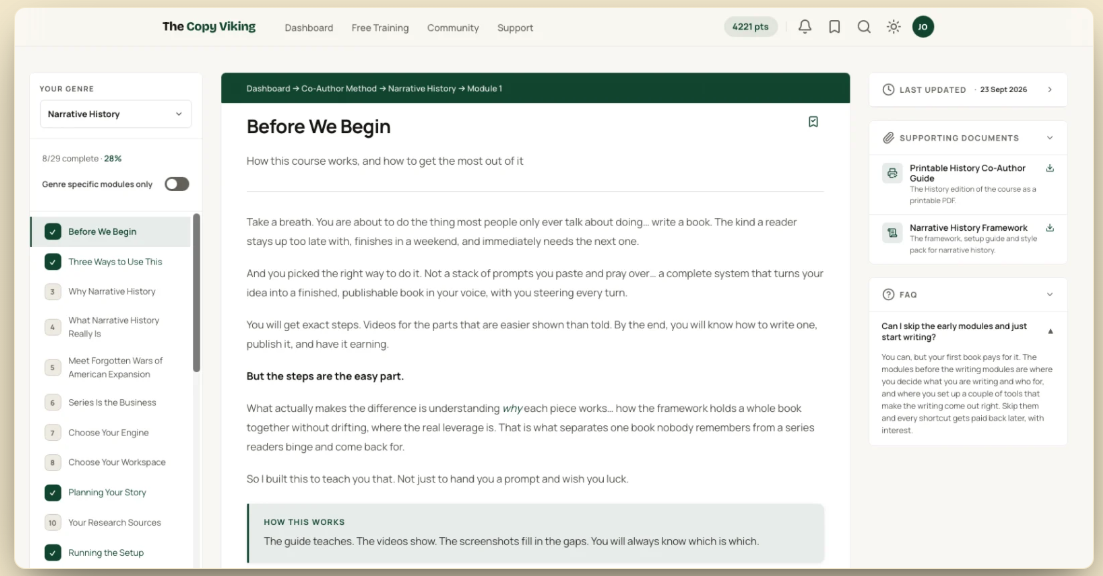
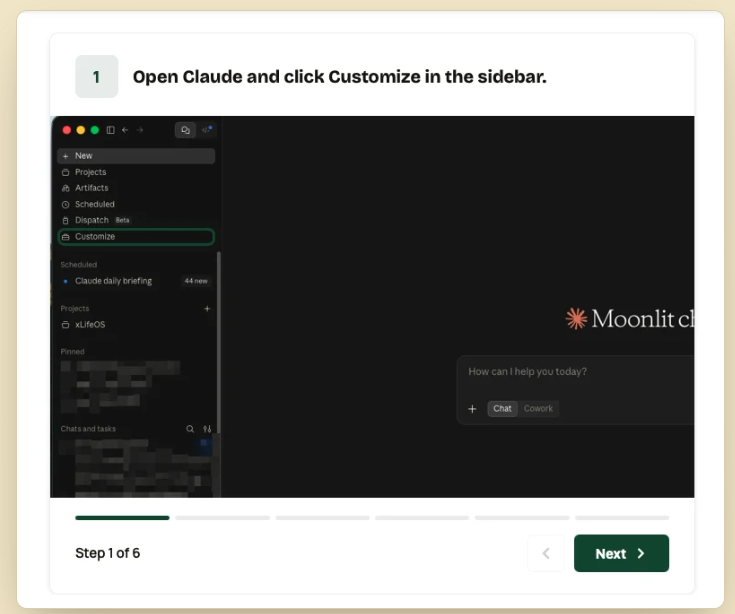
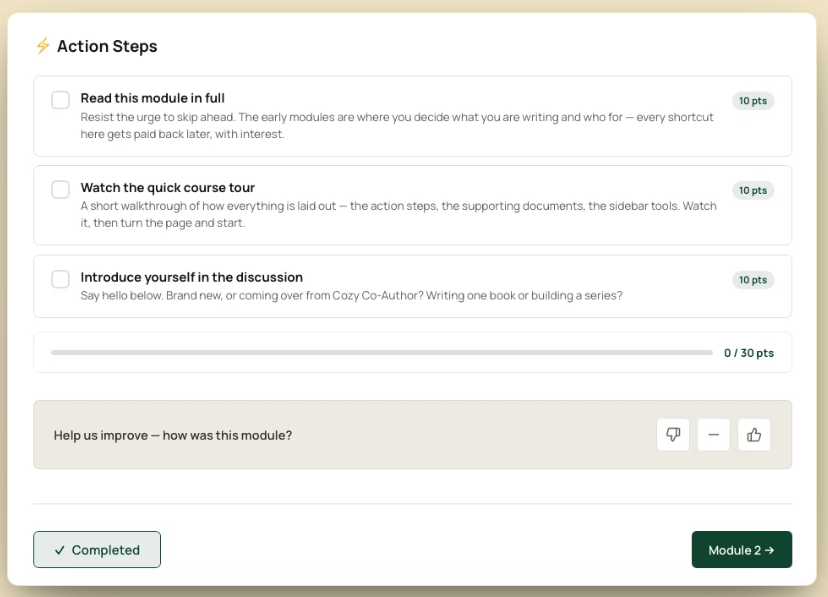
The History Co-Author training takes students on the entire journey – from ideation to published book. Topics include:
- Finding research sources
- Story planning
- To run setup and to know your planning decisions.
- Writing and editing
- The formatting options available in Kindle Create.
- Covers
- KDP publishing, book descriptions and keywords
- Free promotion methods
- Building a series
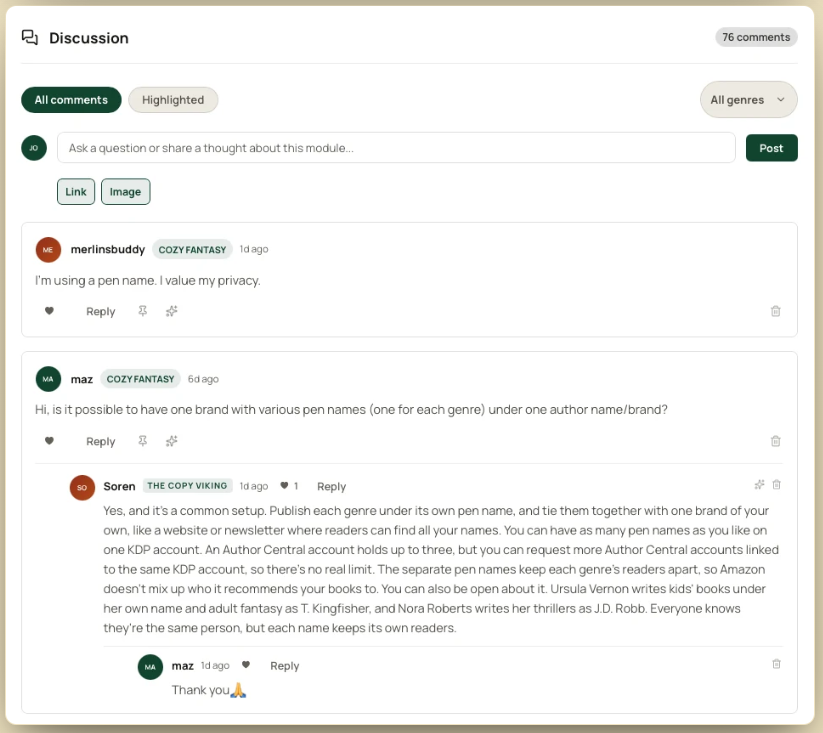
The format consists of interactive screenshot tutorials, video walkthroughs, action steps and progress tracking, discussion threads and FAQs.
It is a great advantage to a total novice to have all the information in one easy-to-find location. Now here are some prompts; good luck.
The catch is size. Twenty-nine modules is quite a large number of modules. If you are already publishing your books on a regular basis, you may not require all of the lessons, and the course may be a bit too heavy for you.
Can History Co-Author Create Accurate History Books?
This is the first question I would ask, as everyone who reads history can pick up on errors. A single wrong date or invented quotation can be the death of a book.
The system is very strict in the record, as per the product material:
- Quotations should be exact and restate the ideas exactly as they are expressed in the source.
- Numbers are taken from the Research Bible
- Does not make up quotations from the past on purpose
- Does not make up a named person’s thoughts or words
- If the record is blank, it writes around the blank or else notes the blank.
- Source notes may provide explanations for information sourced.
That’s a good set of rules to follow. However, History Co-Author cannot guarantee there are no errors.
The final version of the manuscript is required to be read. It will need to be checked and corrected by you. While AI can assist in research and writing, the ultimate decision remains with the writer. I would not use the accuracy system to guarantee that it is accurate, but to minimize issues.
History Co-Author vs. Generic ChatGPT Prompts
The advantage of generic AI prompting is that it’s simple to get up and running, rapid, and flexible. The bad thing about structure is that it’s structure. Research may be disjointed, and longer projects may become disjointed! The comparison is with plain prompting, prompt packs, and one-click book tools, which many people compare to this system.
History Co-Author is not like that. It has a structured planning system, dedicated times for research, a Research Bible, a Book State, choices for narrators, style controls, and a publishing workflow.
The sales brochures provide one reference to the burning of the town of Miami in 1790. The system’s version was based on a report by a general and some specific numbers such as three hundred houses and twenty thousand bushels of corn. Those details were not in the plain prompt, so it didn’t have those.
That is the most clear-cut case that I have ever seen. It’s not like History Co-Author has a magic form of AI. The upside is the workflow that is centered around the AI.
History Co-Author Results: What Does the Evidence Show?
The results shown in the creator’s Amazon royalty report provide a clearer picture of how the books performed. Three selected books generated a combined $175.09 in royalties, including $167.50 from digital retail royalties and $7.60 from subscription royalties.
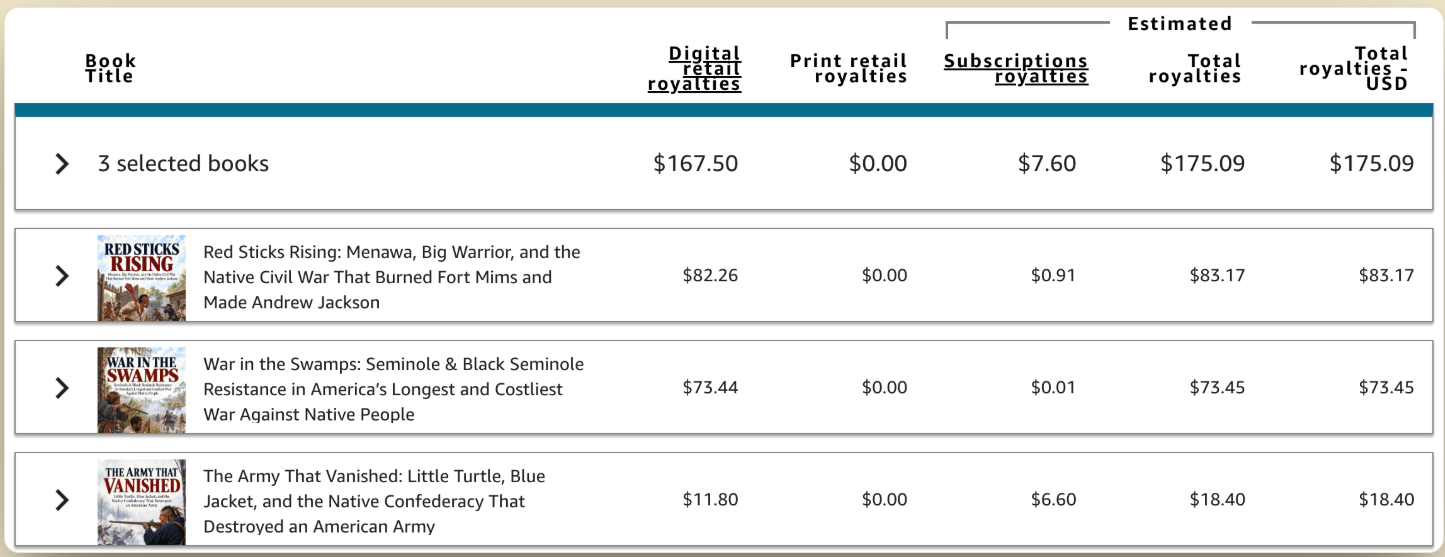
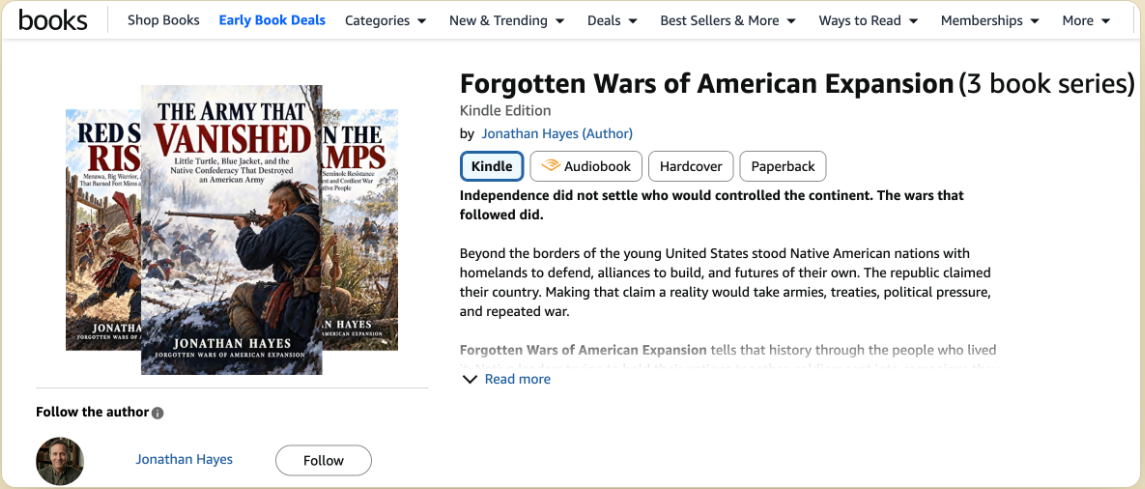
Soren Jordansen used his own system to publish a three-book series called Forgotten Wars of American Expansion, under the pen name Jonathan Hayes. The books are The Army That Vanished, Red Sticks Rising and War in the Swamps.
According to the product material, all three books were researched, written and published in under fourteen days, collectively.
The reported outcomes are:
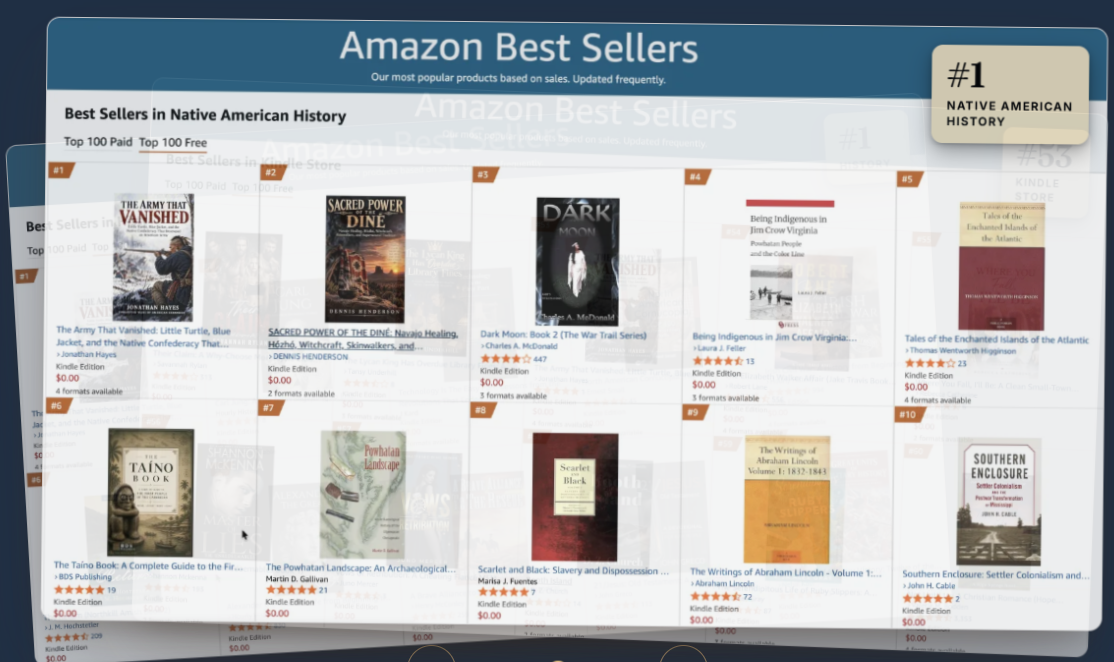
- Book 1 did a free promotion and made #1 on Amazon’s History list.
- It was also on the #1 list of Native American History.
- It was at #53 in the free list for Kindle.
- Red Sticks Rising is #1 New Release in Native American History and #5 paid in History of Southern U.S.
- Books 2 & 3 came in together for the top 20 Native American History list.
- Then, the two paid history books took his top seats in his KDP history list in September.
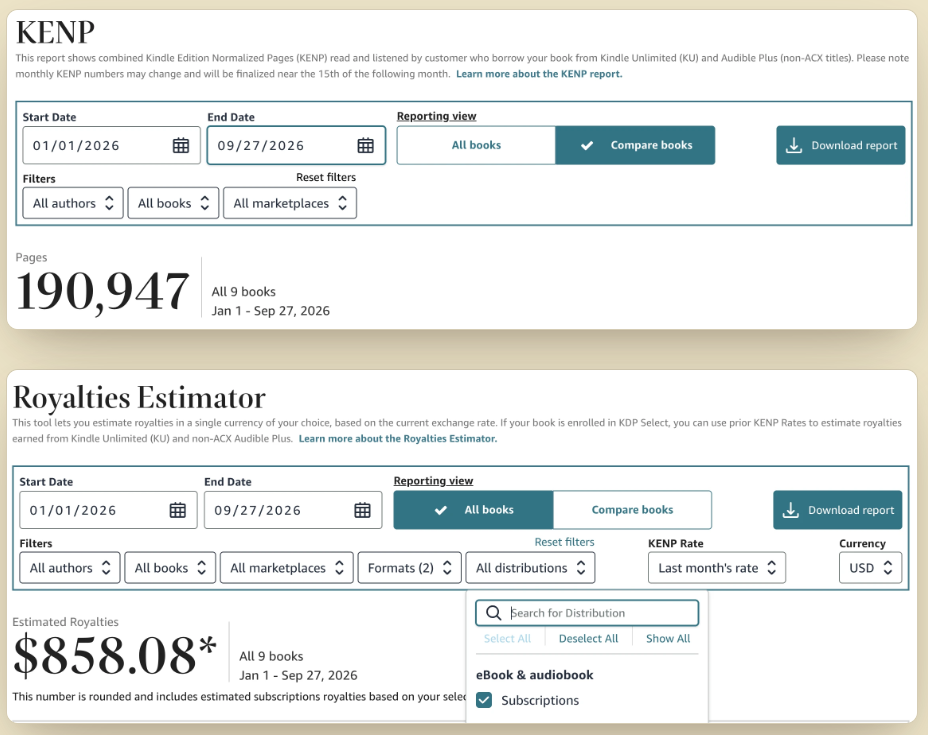
He also reports that one reader found the topic while searching Amazon and purchased book 2 the very next day after it was uploaded. His January to late September 2026 average of Kindle Unlimited pages read is 190,947, and Kindle Unlimited page payments are $858.08 over the same period, while the total Amazon.com royalties for the same period total $1,774.92.
Read carefully! These are all account-level results from the creator and in 9 books, 3 genres. These are not assurances! There may be significant variation in individual results.
My Take on the Writing Quality
I have not read one of these books, and I don’t like to judge a book by its cover, so I can’t form a firsthand opinion about the prose with this system. I can see what they’re doing and what they’re exhibiting.
There was one thing that I did remember. Early versions of the product were correct, but sounded very much like a Wikipedia article (according to the provided material), so Soren was almost putting the product on the shelf. He continued to work and make improvements until it became more of a story.
That is what the system is trying to achieve: source-driven writing and true storytelling, a unified voice, anti-AI-tell controls, and a self-diagnostic pass. It’s not about the facts alone. Readable history is.
It may or may not be there on your subject; only a test will tell.
What I Like About History Co-Author
I have a couple of points I want to make.
- Research comes first. The system isn’t research-light, an important factor for a book that will be fact-checked.
- The Research Bible. Where does one start reading a long book? How to structure a research file when using the chat history of a long book?
- Continuity tools. The Book State is designed to be used for projects that span several chapters.
- Narrator choices. Real control of the final feel with nine voices.
- Publishing training. It includes editing and formatting, KDP, and promotion – beginners don’t get left behind at the end of the book.
- Real showcase books. Soren didn’t just put it into words. He had a series of three books published in it.
- Your own sources. I believe that one aspect that can be overlooked is the ability to include letters, diaries, and archive records. It’s a thing that serious history writers will care about.
What Could Be Better?
Nothing is perfect like this product.
It is not a standalone app, but requires Claude/ChatGPT to operate. It’s not hands-off either. You make decisions, you do research and read the manuscript, you edit, format, and publish. Promotion is a process that requires effort.
Some may find the 29 modules too much to take in. The front end is directed towards narrative history, while other types of history like biography, battles, and ancient history are conveyed in other structures.
The system will not produce evidence if there is little source material, and there is no system, there is no evidence. It admits failures, rather than fabricates facts. It is better for accuracy, but may make some topics more difficult to write.
Nor is there any guarantee of no error. Requires human review.
These aren’t necessarily deal-breakers. It’s just information I would want a buyer to know prior to buying.
Who Is History Co-Author Best For?
This is best suited for these buyers:
- History buffs: you’ve never had a better framework for a war, person, or forgotten event you have wanted to write about.
- First-time authors: you’re in the training to help you understand the publishing process – you don’t have to figure it out on your own.
- KDP publishers: if you already publish, narrative history is a new lane with a ready workflow.
- Nonfiction writers: the system is based upon real events and real people.
- Researchers who value sources: When it comes to research, the research-first design, source notes, and bibliography are perfect for you.
- Series builder – training involves building a series.
- New Co-Author customers: hello, it’s a shout in your direction.
The common denominator is simple. Ideally, one should want to write a history book.
Who Should Not Buy History Co-Author?
If you prefer a magic button, skip this one. If you intend to “press a button”, upload to KDP and wait for royalties, then I wouldn’t bother with this.
It’s also not appropriate for anyone who does not edit. You continue to read the book. But you still verify important information.
If you cannot get your hands on it, then you can’t get historical fiction, invented characters, or made-up dialogue for real people. It is a system where everything is kept close to the record.
If you’re not willing to conduct research, then you will be frustrated, as that is part of the process.
But if you don’t want to use Claude or ChatGPT, or are against them assisting with writing, there’s not much point in buying.
History Co-Author Pricing and Upsells
The History Co-Author pricing is displayed on the sales page like this: It has an inexpensive front end, with optional upgrades.
Front end, History Co-Author, $17: the Narrative History Framework, training, and Narrative History Studio.
- Front end, History Co-Author, $17: the Narrative History Framework, training and Narrative History Studio.
- Order bump, History Ghostwriter License, $27: an optional additional purchase.
- OTO 1, History Genre Vault, $67 (or $97 with Studio): adds six more history and adjacent nonfiction genres.
- OTO 2, History Editor, $47: an editing framework and training.
- OTO 3, History Cover Creator, $67 (or $97 with A+ Author Toolkit): focused on covers and related author tools.
- OTO 4, Promo Stacker, $57: book promotion training and case studies.
- OTO 5, KDP Club, $14.99 per month or $147 per year: a community with weekly group sessions.
Important: KDP Club is a recurring membership. Every other item above is a one-time purchase, so don’t confuse them.
You don’t need every one of these History Co-Author upsells. You can see the current offer here.
Do You Need the History Co-Author Upsells?
Probably not all of them. Select based on the problem to be addressed.
- Complete beginner: the core product may be enough to start. Learn the system first.
- Existing KDP publisher: History Editor may be more useful, since you already know the basic publishing workflow.
- Several history genres: History Genre Vault is a more appropriate add-on.
- Weak on covers: History Cover Creator will help.
- Have trouble promoting: Go for Promo Stacker.
- Want community and group sessions: KDP Club may be useful, but remember it bills monthly or yearly.
While some of these upsells will be good, don’t purchase everything on the checkout page just because it is there. The heart of the product is the part that you can most easily assess first. Don’t increase it until you come across a real gap.
Is History Co-Author Legit or a Scam?
History Co-Author legit and History Co-Author scam are not unheard of. Digital products come with a lot of hype.
This is the information that is currently available. Name of creator: Soren Jordansen. There is a very basic system, training, and Narrative History Studio. Showcase books with Amazon presence, documented results, and a verified reader review with a 5-star rating. The product also has a money-back guarantee for 14 days.
One final point that must be put on the table is this. The full book was evaluated blind by Google’s Gemini. AI involvement was also found by Gemini, but the provided answer also noted that the average commercial reader would not know or suspect its involvement. There is therefore no “undetectable” so-called fair takeaway. It’s “not so obviously AI to an average reader.
History Co-Author seems to be a legitimate product based on what information is in the product and what information is documented in the showcase.
When it comes to buying a product, it doesn’t necessarily mean that you will get a guaranteed income.
Is History Co-Author Worth It?
If you are the right buyer, then the question of whether History Co-Author is worth it is fair and reasonable, and you should definitely consider it.
It’s likely to be suitable for you if you’re interested in KDP, interested in writing history, struggling to organize your research, or if you want the training built in or a repeatable AI-assisted workflow. It’s not about the use of AI. AI is already here for use. The value is in the surrounding work: research, planning, voice, continuity, sources, and publishing steps.
It may not be suitable if you already have an existing system for writing history, don’t want anything to do with AI, if you need full automation or if you are looking for a certain income.
While Soren is having positive results, it’s important to remember that it doesn’t foretell the results of every buyer. I would say this is a structured publishing system, rather than a money machine. This is a more realistic approach to evaluate any History Co-Author AI book workflow.
Frequently Asked Questions
Is History Co-Author legit?
From what I can see from the provided details, it looks like they are a genuine AI-aided history writing system that offers training and has a Studio component as well as published showcase books.
Who created History Co-Author?
Soren Jordansen, the creator of other Co-Author systems.
Does History Co-Author work with ChatGPT?
Yes. It is housed within a ChatGPT project, and the Studio has a ChatGPT Work plugin.
Does Claude work with History Co-Author?
Yes. It is a plugin to be installed into Claude, and the Studio has a Claude Cowork plugin.
Is History Co-Author suitable for beginners?
Yes. The 29 modules provide instruction on how to take an idea from research to writing, editing, formatting, publishing, and promotion.
Can History Co-Author write a complete history book?
It helps students research and write a full-length narrative history book chapter by chapter. You continue to go over and edit the manuscript.
History Co-Author guarantees historical accuracy?
No. It provides guidelines on how to quote, how to research, and how to find sources, but it doesn’t guarantee perfection. Requires human review.
May I use my own primary sources?
Yes. Letters, diaries, and records from archives like the Library of Congress, Internet Archive, and Project Gutenberg are acceptable.
Can History Co-Author help KDP?
It has been designed with History Co-Author KDP in mind. The training includes Kindle Create, covers, description, keywords, and promotion.
Is there a recurring payment with the KDP Club?
Yes. It is $14.99 per month or $147 per year. It’s not a “one-time” kind of deal.
Final Verdict: Should You Buy History Co-Author?
If one really wants to write and publish narrative history, I think it is worth considering.
History Co-Author is NOT a magic button for writing bestseller history books. It provides an organized framework for conducting research, planning, writing, and creating an AI-generated narrative history book.
That distinction matters. The best aspect is the workflow, particularly the Research Bible and continuity tools. The primary drawback is that it’s not hands-off. You make the decisions, you review, edit, and publish, and you should not expect to earn a steady income from KDP.
This is one of the more structured approaches I’ve seen if you’re a history buff, aspiring author, or KDP publisher who would like more structure. If you desire a “shortcut,” then skip it.